

“You Will Be in My Thoughts and Prayers”

prayer hands 1

This Sunday, July 21, we will start the second week of our “Stick and Stones: The Things We Say” Sermon Series. More than any other week, I think all of us have said this phrase: “You will be in my thoughts and prayers.” I know that I have. We say this phrase to communicate with those we care about that we will continue to think about them and lift them in prayers of intercession. I also believe that when we say this phrase, we really mean it. We do think about our loved ones and we do pray for them.

Although the origin of this phrase is unknown, it gained momentum after the Columbine shooting in 1999.[i] It seems these were the only words we were able to utter as a nation after this unspeakable tragedy. In my study of this phrase, I also learned that it is uniquely American and not in other countries.[ii]

Although we do not know the exact origin, we can mark in history when there was a shift in how this phrase was being used and received. What happened was, when a school shooting would happen people would respond with this phrase, but after multiple shootings occurred in a short period of time, people started saying that thoughts and prayers were not enough, and that action needed to be taken to save future lives.

As we reflect on this phrase: “You will be in my thoughts and prayers,” we will see how Jesus Christ calls us to respond to our neighbors who are suffering.

I believe that the desire of our heart while using this phrase is to connect with those who are suffering. It is our attempt to show compassion. Kate Bowler, the author of “Everything Happens For A Reason and Other Lies I’ve Loved” gives us some additional examples in her book of actions we can take instead of saying these words.

When Kate was diagnosed with stage four colon cancer at age 35, she shared that people wanted to make meaning out of her diagnosis. They said many things to her including: “God has a better plan…At least you have you son…At least you’ve had an amazing marriage…God needed another angel.”[iii] Yet responses like this, as Kate reminds us, are not helpful to utter to someone who is suffering, nor are they biblical. Kate reminds us that there are better actions that can be taken while someone is suffering that will remind them of God’s presence and embody our identity as the community of God.

Our Gospel lesson from Luke 10 shows the relationship Jesus developed with Mary, Martha, and their brother Lazarus, and how later he responded to their suffering with compassion and action.

In Luke 10, we read once again the Scripture about the sisters Mary and Martha. This is probably a more familiar parable to us. Here we see type A Martha running around the house trying to make sure everything is perfect for Jesus. Then we see her type B sister Mary who sits at Jesus’ feet. Which personality type are you?

This Scripture sets the stage for us to see how Jesus was making disciples out of these two sisters with the relationship he was building with them and their brother Lazarus. This passage is important for what happens next.

We see that in this scripture Martha questions Jesus with a why question. “Why do you not care that my sister is not helping me?”[iv] Jesus told Martha not to worry about making everything perfect, but to spend time with him, just as Mary was doing.

Later in Scripture in John 11, we again see Martha questioning Jesus with a why question. “Why did you not come sooner?”[v] She was upset. She was grieving and looking at her personality from the other scripture, she was probably the one who had taken on the responsibility of the household to make sure everything was getting done after Lazarus had died. I think she was probably tired and stressed out too.

Martha had a lot on her shoulders, and she reached out to Jesus for help and she was upset that Jesus did not respond in the way she wanted and she made this known to Jesus. She told Jesus, “If you would have been here, my brother would not have died” (John 11:21).

Then we see how Jesus responded to Mary, who was grieving. Although Mary did not run to meet Jesus, Jesus called for Mary to come and see him…and she got up and went to see Jesus. What is also beautiful in this Scripture is that the community who was grieving with her came along. She was not alone; her community was with her.

Now Mary came to see Jesus, but she wasn’t particularly happy to see him. She said to him the same thing as her sister, “Lord, if you had been here, my brother would not have died” (John 11:32b).

It was when Jesus had this encounter with Mary, who so attentively sat at his feet the last time he visited, that he was moved deeply and began to weep.

Jesus response to suffering was to cry with those who were suffering. This is a completely appropriate and biblical response to those who are suffering. So often we think that we must be strong for the person suffering, and we are afraid to show our grief so as not to overshadow their grief, but Jesus calls us to grieve with those who are grieving, this is powerful action from Jesus. We also see this in the community’s communal grief as they sat with Mary.

This verse about Jesus crying is so comforting to us because it calls us to remember that Christ weeps with us when we are grieving. It also reminds us that instead of saying you are in my thoughts and prayers, we don’t have to say anything at all, but we can offer our presence. We can simply sit with those who are suffering and embrace them and cry. It’s okay to not know what to say.

In her book, Kate Bowler talked about the countless friends, colleagues, and family that held prayer vigils for her throughout her surgery and recovery. These prayer vigils were particularly meaningful as Kate experience the power of prayer and the love of God. She was floored that people were actively grieving with her about the news, and yet that they still had the audacity to pray for a miracle. They still held onto the hope and promise of new life that comes through our faith in Jesus Christ.

I know for myself; it was very moving for Nelson and I to receive card after card, from you, and from our family and friend when he was going through his cancer diagnosis and surgery. In that act of sending cards, we received mercy and compassion during a difficult time in our lives. We are thankful for the action of love you took toward us during that time in our lives.

It reminded me that the people of God are always looking for helpful and fruitful ways to respond to suffering and tragedy.

We see later in the book of John, after Jesus offered compassion to Martha and Mary, that he took action. He raised Lazarus from the dead. He showed that he could defeat death and foreshadowed what he was about to do a short time later.

The good news for our lives is that Jesus is calling us, like Mary, to come and rest in the presence of God. God is calling us to take action, although that action may look different than we had originally thought.

We too are called to take action in the midst of suffering and tragedy. Instead of using the phrase “You are in my thoughts and prayers” we are called to sit beside people during their grief and suffering. We are called to pray with them in person or over the phone.

There are also some additional helpful things we can do to journey with those who are grieving.

1) Find time to spend with the person who is grieving.

2) Pray for and with the person grieving. I understand that some folks are afraid to pray out loud in front of someone else, but perhaps, like Esther, God is calling you “for such a time of this,” to make yourself vulnerable in this action, so that the one you are caring for can benefit from this way you can spiritually care for them. Some of the most beautiful prayers I have ever heard are from congregation members.

2) Become the contact person for the family of those who wish to bring food as an expression of their love.

3) Talk about the loved one they have lost and that impact they made on your life.

4) As people lose their loved ones, they may need rides, or find comfort in having others come to appointments with them. In this way, we can be advocates for our loved ones and another set of ears as they are hearing about upcoming appointments and treatment options.

As a church may we continue to rest in the presence of God, like Mary, and be mindful of those who are suffering as we care for them. In the name of the Father, Son, and Holy Spirit. Amen.

Prayer: Loving God, help us to respond to tragedy with compassion and grace. Help us in the times we don’t know what to say. Help us when we say hurtful things even when we have good intentions. Give us the strength to sit with those who are grieving and give us the fortitude to respond to those who are grieving through embodying your love. In the name of Jesus Christ, we pray. Amen. 

Endnotes

[i] https://www.dictionary.com/e/history-phrase-thoughts-prayers/

[ii] https://www.theatlantic.com/health/archive/2017/10/thoughts-and-prayers-vs-policy/542076/

[iii] Kate Bowler. Everything Happens for a Reason and Other Lies I’ve Love. Random House Publishing. New York: NY, 2018. P. xvi.

[iv] NRSV. Luke 10:40.

[v] NRSV. John 11:21.

Additional Resource
Keck et al. The New Interpreter’s Biblical Commentary. Vol. IX. Abingdon Press. 1995. P. 227.

Image used with permission with subscription to ShareFaith.com.

“Love the Sinner, Hate the Sin”

The Power of Words

Sunday, July 14, we will begin a seven-week sermon series entitled: “Stick and Stones: The Things We Say.” So often we all have the best of intentions. We want to respond to people with love and compassion. That is why we throw phrases around like “Love the sinner hate the sin, you will be in my thoughts and prayers, God won’t give you more than you can handle, God helps those who help themselves, and everything happens for a reason.”

In her book, “Everything Happens For a Reason and Other Lives I’ve Loved,” Kate Bowler debunks these expressions we say. After being diagnosed with stage four colon cancer at 35, Kate found these phrases to be meaningless and not helpful, so she wanted other people to understand what might be a more faithful response.

These ingrained phrases become our go-to’s when we don’t know what to say, but are they really helpful? And our question for today is more importantly, are they really biblical?

What is interesting about our phrase from today, “Love the Sinner, hate the sin” is that it is not from the Bible. Jesus never said it. It was actually a phrase from St. Augustine. In his letter to a group of nuns he said: “With love for mankind and hatred of sins.”[i] The modern rendering of the phrase comes from Mahatma Gandhi’s 1929 autobiography. He writes: [the phrase] “hate the sin and not the sinner is a precept which, though easy enough to understand, is rarely practiced, and that is why the poison of hatred spreads in the world.”[ii] Gandhi argues that using this phrase is an excuse to judge another person because it cannot be effectively practiced.[iii]

It is never helpful for us to call someone else a sinner because aren’t we all sinners? Romans 3:23 tells us that “…all have sinned and fall short of the glory of God.” We are all sinners in need of God’s redeeming grace.

We are called to take direction from Jesus Christ in our lectionary Scripture for this Sunday from Luke 10. Here we hear the parable of the Good Samaritan. A lawyer was interested in becoming a disciple of Christ, but he wanted to know the cost. Jesus told him to recite what he knew about following Christ from the Scriptures. He said, “You shall love the Lord your God with all your heart, and with all your soul, and with all your strength, and with all your mind; and love your neighbor as yourself.”[iv]

Christ knew that this commandment needed embodiment which is why he told the parable of the Good Samaritan. (Hear more about this parable on Sunday).

So often our response is judgement and not mercy when we see someone different than us. We, like the Apostle Paul and even John Wesley, may be fearful of how the actions of someone else can affect us.

The person in the Bible in the New Testament who warned us the most about fleeing from sin was the Apostle Paul. In 1 Corinthians 5 Paul makes it clear not to associate with sinners. Even our own John Wesley had a system to deal with active sinners. He would take their ticket away needed for them to attend worship and send them to what was called a “penitential band” until their behavior improved.

Do we hear these same sentiments from Jesus? No, because Jesus wasn’t afraid of sinners, in fact, he recruited them for ministry.

When Jesus called Peter to follow him, his response was: “Go away from me, Lord, for I am a sinful man” (Luke 5:8). Jesus recruited Zacchaeus the sinful tax collector, by making an unexpected meeting with him. Jesus saved the life of a woman caught in the act of adultery. He started a conversation with a Samaritan woman who was not living her best life. Jesus even invited women to follow him, which at that time was unheard of.

Jesus knew we were all sinners and looked at us all the same. It is only us who look at each other different based out of fear.

The phrase “love the sinner, hate the sin” has been used to keep a degree of separation between ourselves and our neighbors. Recently, I have heard this phrase used when referring to our brothers and sisters in Christ in the LGBTQI + community.

When we refer to anyone with this language, we are saying that their relationship with God is contingent upon them fitting in a box we have created for them, instead of their faith in Jesus Christ.

We should be more focused on loving people the way Christ did than judging them. Jesus tells us that our neighbors are everyone that we encounter and that we are called to help them no matter what, no matter who they are or what they have done or are doing.

Recently, I have heard this call of Jesus in our time with the crisis going on at the border. Where immigrant children have been separated from their parents, and are not being treated as humans, but as property. That is not the way we treat our neighbors. That is not the way we treat children of God.

Discipleship is about building relationships with all of God’s people to proclaim the Gospel of Jesus Christ. We see the Apostle Paul understood this when he said, “I have become all things to all people so that by all possible means I might save some.  I do all this for the sake of the gospel, that I may share in its blessings.”[vii]

We are all sinners in need of God’s redeeming grace.

The good news is that through our faith in Jesus Christ, God in God’s mercy, forgives us and offers us new life. The good news is that we do not need to waste another moment of our time deciding who is a sinner and who is not.

Instead of judgement we are called to practice accountability with one another. We are called to confess our sins before God and one another. When we have a grievance with someone, we are called to take someone with us and go talk with that person.[viii] We are called as John Wesley has said to “watch over one another in love.”[ix]

Just as the song goes, “They will know we are Christians by our love.” May we be bearers of life and hope and not judgement and may we be ever careful of the way we talk about our neighbors. In the name of the Father, Son, and Holy Spirit. Amen.

Prayer: God of all of us sinners, thank you for loving us in spite of ourselves, in spite of our imperfections, in spite of our failings, in spite of our judgmental spirits. Help us to see others the way you see us. Help us to not be afraid to associate with many different kinds of people so we can see and be aware of the fullness of your creation. Help us to love our neighbors fully. In the name of your Son, Jesus Christ, we pray. Amen.

Endnotes

[i] http://queergrace.com/hate-the-sin/

[ii] Ibid.

[iii] Ibid.

[iv] Luke 10:27

[v] https://www.biblegateway.com/resources/commentaries/IVP-NT/Luke/Discipleship-Looking-Our-Jesus

[vi] https://www.franciscanmedia.org/the-rift-between-jews-and-samaritans/

[vii] 1 Corinthians 9:22b-23.

[viii] Matthew 18:15-17.

[ix] https://www.seedbed.com/the-early-methodists-watched-over-one-another-in-love/

Image used with permission with subscription to ShareFaith.com.

“The Servant King”

palm sunday clip art

Last year was the first time we took Dean to see a parade. It wasn’t just any parade. It was the annual firemen’s parade in Culpeper, Virginia. You may or may not know that my son Dean is obsessed with firetrucks. I thought it was just a phase when he was two, but every day he asks to watch firetrucks on T.V. and he plays with the many firetrucks he has acquired. My favorite part of the parade was seeing his face light up as all the different firetrucks came down the road. He was just as excited when he saw the last firetruck as when he saw the first firetruck. Parades are a fun way to celebrate and be part of a community. It is a day when the whole community puts aside their differences and celebrates something they have in common.

In our Scripture for today from the gospel of Luke, we hear about a parade of sorts. It was the second parade that had taken place in Jerusalem in a short amount of time. Reverend Todd and Jennifer Pick describe the first parade that took place: “As Roman imperialism crushed and oppressed God’s people, Pilate made the trip into town to uphold law and order. Pilate must have entered the city in a procession of pomp complete with war horses and an armored army.”[i]

The people of Jerusalem probably did not celebrate this parade. They may have been interested to see it take place, but the feeling left with the parade would be fear and not excitement. This was an officer of the law they had to follow, whether they wanted to or not or there would be extreme consequences. While it was probably impressive to witness Pilate’s entrance into town with his armed guards, beautiful horses, and decorated vestments, the people did not celebrate his entrance into town. Pilate was comfortable riding a war horse as he had been a knight before he was elected to hold a government role.[ii] He probably walked through the streets head held high, back straight projecting an image of authority as he looked down on the people.

In stark contrast, we hear about the second parade, Jesus’ triumphal entry into Jerusalem. We find this account in every gospel. Although each gospel details the event a little differently, we hear that Jesus rides into town on a lowly colt found by his disciples and that people line his path with palms and their own cloaks. John 12:13 tells us the people “took palm branches and went out to meet him, shouting, “Hosanna![a]” “Blessed is he who comes in the name of the Lord!”[b] “Blessed is the king of Israel!”

In this parade, the people of Jerusalem recognized Jesus Christ as king. They were not frightened by his presence, but excited that the promised Messiah was coming to save them. All along the way in this parade process, Jesus’ disciples were reciting all of his amazing deeds and miracles, just in case people did not know who he was. Jesus did not come into town proud and arrogant like Pilate.
He came into town as a humble servant. He was unarmed, he did not have beautiful vestments, but he had come to be among the people and show them that the Son of God was with them. Jesus entry marks one week from his resurrection, and this is why Palm Sunday kicks off holy week. It is the marking of the trajectory that Jesus is taking from Jerusalem, to the cross, to the tomb and beyond.

Prayer
Almighty God, as we approach Holy Week help us to continue to follow Jesus from Jerusalem to the cross. Even when the journey become difficult help us stay beside Christ to bear witness to his suffering and death for our sins. Give us joy on Palm Sunday that as we wave our palms and shout “Hosanna” we recognize that you are still in the business of saving us from our sins. Make your presence known to us today as we gather strength for the journey. In the name of Jesus Christ we pray. Amen. 

Endnotes

[i] https://www.umcdiscipleship.org/worship/lent-2019-worship-planning-series/april-14-palm-passion-sunday-year-c/palm-passion-sunday-2019-year-c-preaching-notes

[ii] https://www.britannica.com/biography/Pontius-Pilate

Image used with permission with subscription to sharefaith.com

“My God, My God, Why Have You Forsaken Me?”

LIGHT IN THE DARKNESS
This week we continue our fourth week of our “Final Words from the Cross” sermon series. Our statement to reflect upon today is “My God, My God, Why Have You Forsaken Me?” If we are honest, we have all had moments in our lives where we have asked God this same question. For me, it is when I was in my first year of seminary. After many conversations and much deliberation my fiancé and I decided to break up. We had been together for five years. We had planned a future together. Before I left to go to Duke Divinity School he proposed in a grand gesture to show his love for me.

You see I was on a certain trajectory. I graduated college, I was to finish seminary and then get married to my high school sweetheart. Things were not supposed to happen this way…especially not to me. Although we both made the decision together to end our relationship so we could both move forward in other areas of our life, I was crushed. He was my first true love and my best friend. What was I supposed to do now? I felt like life as I knew it was over.

I found myself in a new state and new place my first year of seminary and coming in I did not know anyone. My first semester I had spent so much time going back and forth from Duke to Tech that I had not tried to make new friends so I did not have a support system.

To make matters worse, I had shared about my breakup in my required Duke covenant group and the leader quickly moved on to the next person, not stopping to pray for me, not seeming to acknowledge the depth of my pain or this important life event. I had great family and friends from back home, but I felt alone. I was also angry. I thought “God, I finally have surrendered my life to you. I am here. I am in seminary on my way to being a pastor. Why now? Why could I not have this one thing and be happy? Do I really have to sacrifice everything I care about for you?” I was in a dark place and uttered these same words of Jesus Christ.

We all have experiences in life that lead us to this place. We live in a broken world where there is pain and suffering. We lose the people we love. Life is not fair. Others always seem to be able to get ahead while we feel like we are working just as hard or even harder. It is comforting for us today to know that Jesus also knew what it felt like for everything to go wrong. Jesus knew what it felt like to feel like he had been abandoned by God.

Now, we know that God was with Christ, because Jesus was the Son of God, a person of the Trinity who was never separated from God. Even though Christ felt abandoned by God, God was still with him.

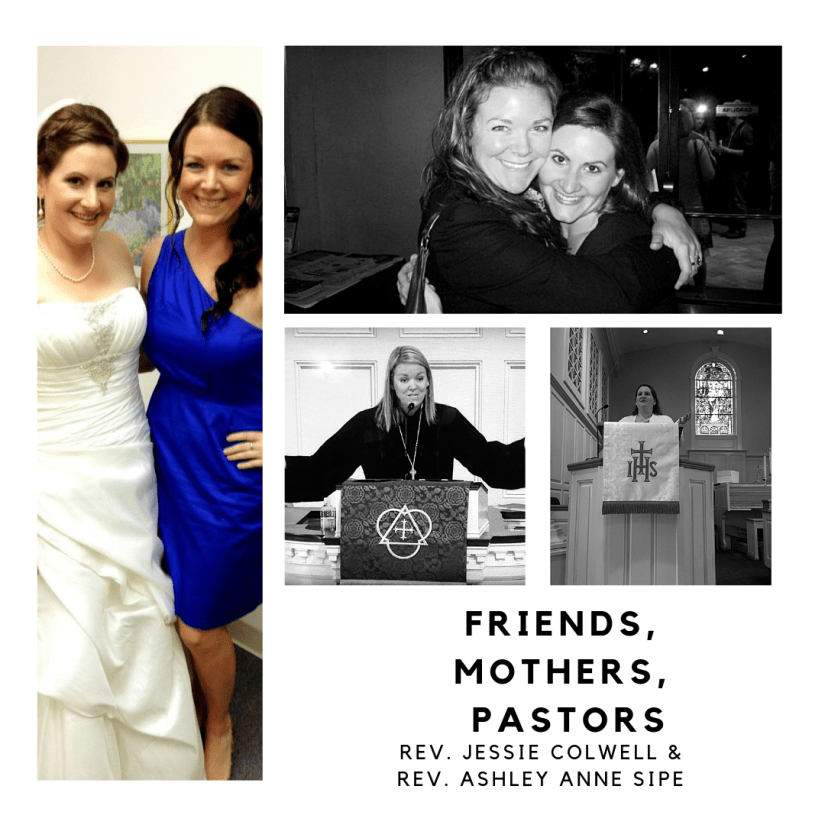
We are called to be a light to those who are in darkness, to those who utter these same words of Christ. God has blessed me with amazing family and friends who were there for me in the difficult moments of life. In seminary right after my breakup God sent me a friend named Ashley. She journeyed with me through my grief and I helped her with some of hers as well. We are all dealing with something aren’t we?

Ashley and I developed a beautiful friendship that continues today. We have seen each other continue to live out the calling that God has placed on our lives. Also, we have both since been married and had our first children and we are both now UMC pastors me in Virginia and her in Texas.

When we are going through difficult things in life, it is sometimes hard for us to look toward the future with hope, but time after time I see that God’s plan for my life was better than any plan I ever could have made. I wish I could have believed that in the dark moments of my life, so I feel I am charged with sharing this same message of Christ with others.

The good news for our lives today is that God has not abandoned us, God is with us, and God is offering us a future with hope.

So friends take a moment to be there for those who need it the most and if you are struggling you are not alone, God has not abandoned you and I am here to listen.

Prayer: God, we thank you that even in our darkest moments, you have not abandoned us. We take comfort that you know our pain, you know our grief, and your son Jesus died our death, and rose so that we can always have hope for tomorrow. May we not take a single moment for granted and sacrifice our time to help those the most in need of your love and grace. Amen. 

JESS AND ASH 2019Left: Me and Ashley at my wedding where she was a liturgist.

Top Right: Taken after Broadway Revue 2013, where Ashley came back to support me as Co-Director. Middle: Ashley preaching at her church. Bottom right: Me preaching at my last appointment.


“New Life in the Midst of Death”

Magnolia

This coming Wednesday, March 20 is going to be the first day of spring. This is a day that has been long awaited through such a long winter of bad weather and rain. I found it ironic during our last snow when I was playing outside with Dean, when I looked at a snow-covered tree with the buds piercing through the snow. New life was trying to spring forth, even in the cold of winter snow.

Christ is always offering us new life, but so often we miss the signs of new life all around us. I think this is why I love the season of Spring, because we look all around at the beauty of creation and see new life bursting forth. As we continue our “Final Words From the Cross” sermon series this Sunday we see Jesus Christ offering new life to a criminal hung beside him on the cross.

Our Scripture from Luke 23:42-43 reads: “Then he said, ‘Jesus, remember me when you come into your kingdom.’ He replied, ‘Truly I tell you, today you will be with me in Paradise.’” We see in the last moments of his life a criminal reached out to Jesus, and Jesus in God’s mercy invited him into paradise.

What an amazing God we serve! I hope to see you this second Sunday of Lent in worship.

Prayer: Living God, you are always making all things new and offering us new life in the midst of death. Help us to see the signs of your kingdom breaking through all around us. In the name of Jesus Christ we pray. Amen.